TAFU

- All
- Product Name
- Product Keyword
- Product Model
- Product Summary
- Product Description
- Multi Field Search

Views: 0 Author: Site Editor Publish Time: 2026-07-28 Origin: Site


Outdoor wheels face rain, sunlight, rough pavement, debris, and changing temperatures. Can polyurethane wheels manage all five?
Yes, they often can, but the exact compound matters. Polyurethane wheels perform best on concrete, asphalt, and other firm surfaces. They combine strong load support, abrasion resistance, and quieter rolling.
This guide explains their strengths, limits, alternatives, and selection requirements. You will learn when polyurethane works outdoors and when another wheel makes more sense.
Polyurethane wheels are good for outdoor use under the right conditions. They suit heavy carts, trolleys, and material-handling equipment traveling across firm, prepared surfaces. Typical examples include concrete yards, loading areas, paved walkways, and smooth asphalt.
They offer a useful middle ground between rubber and hard plastic. The tread supports substantial loads without the severe compression common in softer rubber. It also absorbs more vibration than nylon, steel, or other rigid materials.
TAFU describes its Premium Polyurethane Wheels Custom Made in China as customizable for hardness and core material. That flexibility matters outdoors because no single polyurethane compound suits every climate.
Outdoor condition | General fit | What to verify |
Smooth concrete or asphalt | Excellent | Load, speed, and wheel diameter |
Wet paved surfaces | Conditional | Tread grip, drainage, and braking |
Compacted gravel | Conditional | Larger diameter and softer tread |
Deep gravel, sand, or mud | Poor | Consider pneumatic rubber wheels |
Long sun exposure | Conditional | UV-stabilized compound and storage |
Constant hot moisture | Conditional | Hydrolysis-resistant formulation |
Use polyurethane when durability, load capacity, and floor protection carry equal importance. It works especially well where equipment crosses between a warehouse and an outdoor loading zone.
However, the entire caster must suit exterior service. A moisture-resistant tread cannot protect an untreated steel frame or open bearing. Look for corrosion-resistant hardware, sealed bearings, and suitable grease.
An What are the Best Wheels for Outdoor Use? also recommends checking surface, travel distance, exposure time, and load. These factors usually matter more than the material name alone.
Standard industrial polyurethane may suit occasional outdoor trips. Permanent exposure deserves a documented outdoor formulation and protected caster components.
The safest answer is therefore “yes, if specified correctly.” Confirm the compound, load rating, speed limit, temperature range, and surface conditions before ordering.
Outdoor polyurethane wheels succeed because manufacturers can tune their hardness and resilience. The material can remain elastic enough for comfort while resisting cuts, chunking, and permanent deformation.
Concrete and asphalt act like sandpaper during repeated travel. Polyurethane generally resists this abrasion better than ordinary soft rubber. It also rejects many small chips instead of holding them inside the tread.
Its high load capacity is equally valuable. The tread compresses under weight, then recovers as the wheel rotates. Proper recovery reduces drag, flat spotting, and unnecessary pushing effort.
Polyurethane usually rolls more quietly than steel or nylon. It also avoids the floor gouging associated with metal wheels. Non-marking compounds can move between outdoor pavement and finished indoor floors without leaving black streaks.
This combination suits airports, retail logistics, factory yards, and mixed indoor-outdoor routes. It also protects delicate cargo by moderating small impacts.
Well-selected compounds resist water, oils, grease, and many cleaning chemicals. That makes polyurethane caster wheels useful around service yards, loading bays, and industrial work areas.
Chemical resistance is never universal, however. Solvents, acids, cleaners, and exposure temperatures can change compatibility. Ask the supplier to check every known substance before approval.
Three design choices strongly influence outdoor results:
Tread hardness: Softer treads improve grip and cushioning. Harder treads increase load capacity and reduce rolling resistance.
Wheel diameter: Larger wheels cross joints, stones, and shallow holes more easily. They also reduce impact at each obstacle.
Tread thickness: Thicker treads improve cushioning, but they may generate more heat. Heavy continuous travel needs careful thermal design.
Polyurethane performs best when these choices match the route. A small, hard warehouse wheel may fail on broken pavement. A larger, resilient wheel can handle the same path more comfortably.
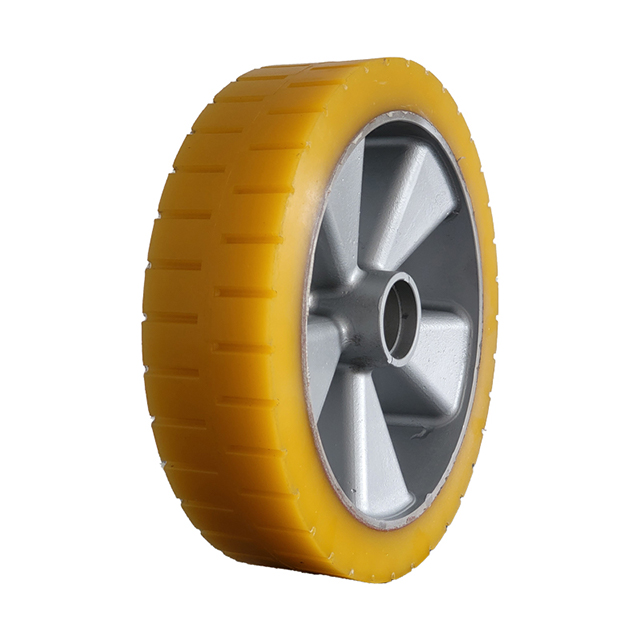
Polyurethane is a family of engineered materials, not one universal compound. Outdoor failures often begin when buyers treat every formulation as identical.
Prolonged ultraviolet exposure can discolor or weaken an unstabilized tread. UV stabilizers, pigments, covers, and indoor storage can slow that damage. Request an exterior exposure rating instead of assuming protection.
Moisture creates an important formulation distinction. Polyester polyurethane offers strong abrasion and oil resistance, yet hot moisture may cause hydrolysis. Polyether polyurethane usually handles wet environments better. Published polyurethane tread data shows how hydrolysis resistance varies between formulations.
Cold can reduce flexibility, while high heat may soften the tread. Every product has its own temperature range. Ambient temperature alone is insufficient because wheel flexing also creates internal heat.
Repeated flexing generates hysteresis heat inside polyurethane. High speed, heavy loads, thick treads, and long travel increase that heat. Excessive buildup can damage the tread or weaken its bond to the core.
Wet traction may also trail soft rubber. Smooth, hard polyurethane can slip on wet ramps, painted concrete, or oily pavement. Softer compounds and suitable tread patterns help, but braking tests remain essential.
Deep gravel, sand, mud, and broken ground create different problems. Small solid wheels sink or stop at obstacles. Larger pneumatic tires usually provide better flotation and cushioning there.
Watch for these early warning signs:
Cracks, glazing, cuts, or missing tread material.
Flat spots that remain after the wheel starts moving.
Swelling, softening, or unusual color changes after chemical exposure.
Rust, rough bearings, side play, or water-contaminated grease.
Tread separation, rising noise, vibration, or higher pushing effort.
Stop using a damaged wheel before the tread separates. Then review load, speed, route, exposure, and storage conditions. Replacing the same specification may simply repeat the failure.
The best outdoor wheel depends on the job, not one universal ranking. Polyurethane excels on firm surfaces, while other materials solve different terrain problems.
Wheel material | Outdoor strengths | Main limitations | Best fit |
Polyurethane | High load support, abrasion resistance, quieter rolling | Formulation-sensitive; limited wet grip | Heavy carts on concrete or asphalt |
Solid rubber | Strong grip and cushioning | More compression and rolling resistance | Wet pavement and moderate roughness |
Pneumatic rubber | Excellent shock absorption and flotation | Punctures, pressure checks, lower stability | Gravel, grass, mud, and broken ground |
Nylon or plastic | Low rolling resistance and moisture resistance | Hard ride, noise, weak obstacle handling | Light loads on smooth paved routes |
Metal | Extreme load and heat capability | Noise, corrosion, and surface damage | Specialized heavy industrial service |
Choose outdoor polyurethane wheels when the route is mostly paved. They are especially useful for high loads and frequent indoor transitions. Their non-marking tread protects epoxy, tile, and polished concrete after outdoor travel.
Choose solid rubber when traction and vibration control matter more than easy rolling. Rubber often feels safer on wet ramps or irregular pavement. It can also tolerate faster towing when an approved polyurethane design would overheat.
Choose pneumatic wheels for loose or deeply uneven terrain. Their larger footprint spreads the load across gravel, soil, or grass. Air pressure provides cushioning that a small solid wheel cannot match.
Nylon and metal wheels favor hard, clean surfaces. They roll easily under load but transmit impacts into equipment and cargo. Metal also needs corrosion protection outdoors.
A mixed route may justify a compromise. Start by identifying the worst regular surface, not the smoothest one. Then test turning, braking, starting force, obstacle crossing, and noise under the real load.
Do not compare only purchase prices. Include tread life, floor damage, operator effort, downtime, bearing replacement, and cargo protection. A properly specified polyurethane wheel may cost more initially yet lower the total operating cost.
Begin by measuring the actual operating conditions. Guessing the load or route can defeat even a premium wheel.
Record the equipment weight and maximum cargo. Divide the total carefully because uneven floors rarely share weight equally. Apply the caster manufacturer’s safety factor and dynamic-load guidance.
Next, document these conditions:
Surface types, joints, holes, slopes, ramps, and loose debris.
Maximum speed, trip length, daily cycles, and continuous running time.
Rain, standing water, humidity, sunlight, and storage location.
Lowest and highest temperatures during actual operation.
Oils, fuels, cleaners, salt, and other chemical exposure.
Required braking, noise, floor protection, and pushing effort.
Choose a larger diameter when the route contains joints or stones. Select tread hardness by balancing grip, cushioning, load, and rolling resistance. Confirm whether polyether or polyester chemistry better matches the moisture and chemical profile.
Core and bearing choices also deserve attention. Aluminum, coated steel, or suitable plastic cores resist different loads and environments. Sealed bearings and corrosion-resistant caster hardware protect the system beyond the tread.
TAFU states in its company profile that it began manufacturing in 1997. Its engineering options include custom hardness levels and aluminum, steel, or plastic cores. Buyers should provide a complete duty profile before requesting a recommendation.
Inspect wheels at scheduled intervals and after severe impacts. Remove wire, stones, and other debris. Wash away salt or chemicals using an approved cleaner, then dry the assembly.
Check tread wear, bonding, bearings, fasteners, brakes, and swivel movement. Rotate equipment periodically during long storage under heavy loads. Shelter unused carts from sun, rain, and standing water.
Finally, test a sample under normal load. Run it across the worst route during realistic weather. A short field trial can reveal slipping, heat, vibration, or steering problems before full deployment.
Polyurethane wheels are strong outdoor performers on firm, prepared surfaces. Their load capacity, abrasion resistance, and floor protection suit many industrial carts.
They still require the right compound, diameter, hardware, and duty rating. Rough ground, wet ramps, or continuous high-speed travel may favor rubber.
Share your route, load, and climate details with TAFU before selecting an outdoor wheel.
A: Polyurethane resists water under normal exposure. Hot moisture can damage polyester compounds; verify hydrolysis resistance.
A: Only when component ratings support permanent exposure.
A: They suit firm, compacted gravel. Loose gravel needs larger pneumatic wheels.
A: Polyurethane favors loads and wear resistance. Rubber favors wet grip and rough terrain.
A: Use outdoor treads, corrosion-resistant frames, sealed bearings, and approved grease.
