TAFU

- All
- Product Name
- Product Keyword
- Product Model
- Product Summary
- Product Description
- Multi Field Search

Views: 0 Author: Site Editor Publish Time: 2026-06-22 Origin: Site


Facility noise is not just a minor annoyance. It is a serious ergonomic hazard. High decibel levels create strict compliance issues for modern plants. You might be upgrading material handling carts or heavy machinery right now. Buyers frequently question a common industry claim. Will replacing steel or hard plastic actually solve your acoustic problems?
Yes, high-quality polyurethane wheels are exceptionally quiet. They act as a highly effective shock-absorbing buffer on hard surfaces. However, their exact noise reduction depends entirely on several variables. You must carefully consider their durometer, the environmental temperature, and the hardware housing them.
We need to move beyond generic marketing claims. This article provides a strict technical evaluation of acoustic performance. We will help facility managers and procurement teams specify precise wheel compositions. You will learn exactly how to balance massive load demands against your facility noise constraints.
Polyurethane bridges the gap between the silent operation of rubber and the massive load capacity of steel.
Noise reduction is directly tied to the Shore hardness scale; soft polyurethane (60A–75A) dampens vibration significantly better than hard formulations (70D+).
Upgrading the wheel material alone won't fix a noisy cart; unsealed bearings and loose swivel housings can amplify noise by up to 40%.
While rubber casters may offer slightly lower decibel ratings in absolute terms, polyurethane wins in Total Cost of Ownership (TCO) for environments involving heavy loads, oils, or sensitive flooring.
You must frame your facility noise problem using realistic industrial baselines. Equipment noise scales logarithmically. A small drop in decibels means a massive reduction in actual sound pressure. Traditional steel casters routinely exceed 70 dB during standard operation. Hard nylon or plastic options sit around 68 dB. High-quality soft polyurethane wheels can operate beautifully close to the 50 dB range. This mirrors the quiet performance of Thermoplastic Rubber (TPR).
How exactly does polyurethane reduce noise? We need to look at vibration dampening mechanics. Steel transfers every single floor surface anomaly directly upward. It pushes kinetic energy straight into the cart chassis. This causes the entire frame to rattle. Polyurethane acts entirely differently. Its elastomeric properties absorb kinetic energy instantly. The material swallows micro-impacts before they ever reach the cart frame.
You must also consider the F.O.D. (Foreign Object Debris) factor. Factory floors always contain debris. Hard wheels crush this debris relentlessly. This crushing action causes sharp cracking and popping noises. Polyurethane naturally repels small debris. Sometimes it simply rolls softly over the obstacle. It accomplishes this without causing an acoustic spike.
Common Mistake: Facility managers often swap out wheels without cleaning the floor. Even the quietest material will generate noise if it constantly rolls over heavy metal shavings. Implement sweeping protocols alongside your hardware upgrades.
Material Type | Average Noise Level (dB) | Acoustic Profile on Hard Concrete |
|---|---|---|
Forged Steel | 70+ dB | Loud, echoing, high chassis vibration transfer |
Hard Plastic / Nylon | 65 - 68 dB | Moderate clattering, crushes debris loudly |
Hard Polyurethane (70D) | 58 - 62 dB | Firm rolling sound, minimal resonance |
Soft Polyurethane (75A) | 50 - 55 dB | Quiet hum, absorbs floor anomalies |
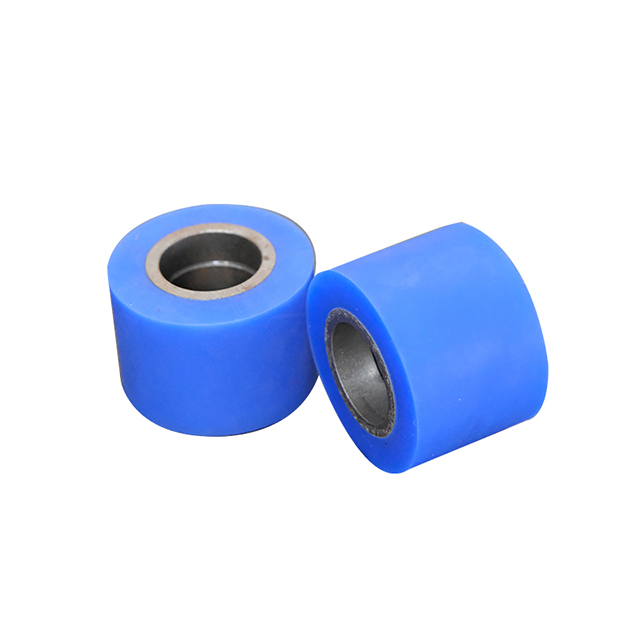
Wheel hardness dictates your final acoustic result. Engineers measure this using specific Shore Scales. You need to understand the fundamental difference between Shore A and Shore D formulations.
Shore A (Soft to Medium): Formulations falling between 60A and 85A are engineering marvels. They maximize noise reduction. They deliver incredible shock absorption. These are your premier choices for noise-sensitive environments.
Shore D (Hard): Formulations hitting 70D and above serve a different purpose. They handle extreme loads. They often gain 30% more capacity than soft variants. They offer the lowest rolling resistance. However, they will generate noticeably more noise on rough concrete.
Buyers face an inherent trade-off here. You cannot maximize silence and maximize load capacity simultaneously. A softer, quieter wheel requires a slightly higher starting force to roll. This introduces an ergonomic cost. It also carries a lower maximum weight limit compared to a rigid nylon wheel.
Tread thickness matters immensely. Do not ignore the pour depth. A thicker polyurethane layer changes the performance profile. A full 1-inch thickness allows the wheel to wrap over obstacles better. This thickness reduces the exact PSI pressure placed on the floor. Lower pressure enhances the fatigue life. It also maximizes acoustic dampening perfectly.
Rubber and polyurethane often compete for the same applications. You must separate their specific use cases carefully. Soft rubber or TPR is technically the quietest option available. We acknowledge this absolute metric. We recommend rubber strictly for lightweight applications. Think of hospital carts or library trolleys. Rubber excels on highly uneven terrain where chemical exposure is zero.
Polyurethane steps in when rubber inevitably fails. It serves as the ultimate heavy-duty hybrid. Polyurethane dominates several critical operational categories:
Load Capacity Excellence: Polyurethane resists static deformation perfectly. We call this flat-spotting. Heavy static loads compress rubber rapidly. Rubber degrades and permanently flattens. Polyurethane maintains its round shape under intense pressure.
Chemical and Environmental Resistance: Rubber breaks down incredibly fast. Manufacturing oils destroy it. Solvents and greases melt rubber treads. Polyurethane remains chemically inert to most common factory fluids. It survives harsh industrial exposure safely.
Premium Floor Protection: Standard rubber leaves ugly black streaks. Polyurethane is naturally non-marking. It protects expensive warehouse floors. It keeps commercial epoxy coatings pristine and scratch-free.
Best Practice: Always check your facility's chemical profile. If your floor has standing oil or grease, eliminate rubber immediately. Use an 85A polyurethane blend to maintain silence while surviving the chemical exposure.
Upgrading your wheel tread solves only half the acoustic equation. The hardware housing creates its own noise profile. You must address the bearing bottleneck immediately. Standard bushings create massive metal-on-metal friction. Unsealed bearings grind loudly over time. You must specify sealed precision ball bearings. These premium bearings lock in crucial lubrication. They keep destructive dirt out. This simple upgrade drops operational noise significantly.
Swivel rig chatter ruins a quiet cart setup. Loose swivel raceways vibrate violently. Unlubricated rigs rattle during every slight turn. This resonance amplifies throughout the entire frame. You should always check for sealed swivel housings. Sealed raceways prevent vibration resonance completely. They ensure a smooth, silent directional change.
Temperature variations present an often-overlooked environmental risk. Polyurethane reacts to extreme cold. It hardens noticeably in freezing environments like cold storage warehouses. The material becomes temporarily rigid. It will sound much louder at the start of a morning shift. Do not panic if this happens. Rolling friction soon generates internal heat. This heat warms the material back to its flexible, quiet state.
Procurement teams must look past the initial material selection phase. Custom or high-grade polyurethane casters transform your operational lifecycle. They deliver exceptional ergonomic returns. They improve facility safety metrics dramatically.
The maintenance lifecycle of polyurethane wheels changes your operational rhythm. These wheels reduce replacement frequency significantly. They often deliver up to three times the functional life of standard rubber. They actively resist tread separation under stress. They never require air inflation. This eliminates daily pressure checks. It removes sudden flat tires from your daily operational disruptions.
Energy efficiency and worker safety represent massive wins. High-grade polyurethane boasts remarkably low rolling resistance compared to soft rubber. Operators need less physical energy to initiate a push. This lowered resistance reduces daily operator fatigue. It directly mitigates pushing-related physical injuries. Lower fatigue means fewer worker compensation claims. You achieve all these ergonomic victories while maintaining acceptable noise compliance limits across the floor.
Best Practice: Audit your push/pull forces regularly. Use a digital dynamometer. Measure the exact force required to start a cart. Switching to a premium polyurethane tread often drops this starting force by 30%, protecting your workforce's physical health.
Polyurethane wheels are definitively quiet. They operate brilliantly as shock absorbers. However, they are best defined as the most versatile quiet wheel on the current market. They blend acoustic performance with industrial-grade strength.
Evaluate your acoustic baseline before upgrading components blindly.
Select a softer Shore A durometer to maximize vibration dampening.
Pair your premium treads with sealed precision ball bearings to eliminate hardware chatter.
Leverage low rolling resistance to improve operator ergonomics and safety.
Your next step requires careful calculation. Audit your floor conditions today. Calculate your maximum dynamic load accurately. Add a 25% to 100% safety buffer to prevent overloading. Overloading always causes excessive noise. Finally, consult directly with a trusted manufacturer. Select the exact Shore hardness and bearing combination engineered perfectly for your specific facility.
A: Generally no, but they can occasionally "chirp" during sharp turns. This happens under extremely heavy loads on coated epoxy floors. Proper wheel sizing prevents this issue entirely. You must avoid heavy grease accumulations on the floor. Grease attracts dirt and causes sticking. Use high-quality silicone-based lubricants for your regular maintenance.
A: Extreme cold causes elastomers like polyurethane and rubber to stiffen rapidly. They will sound much louder and feel rigid initially. However, they will return to their quiet, shock-absorbing state quickly. Normal operational friction generates necessary internal heat. This heat softens the tread back to its optimal operating condition.
A: No. Polyurethane is a specifically non-marking, resilient material. It serves as the gold industry standard for protecting sensitive floors. It guards expensive flooring from deep gouges and permanent scratches. It accomplishes this protection while keeping rolling noise to an absolute minimum.


