TAFU

- All
- Product Name
- Product Keyword
- Product Model
- Product Summary
- Product Description
- Multi Field Search

Views: 0 Author: Site Editor Publish Time: 2026-03-26 Origin: Site


Forklifts play a vital role in warehouses, factories, and other industrial environments, helping businesses transport goods quickly and efficiently. However, to ensure that these machines work effectively, it is crucial to select the right tires. One of the most popular tire options for forklifts is Forklift Solid Tires. But what exactly are these tires, and how do they compare to other types of forklift tires?
Selecting the right tires for forklifts is essential for maintaining operational efficiency, safety, and long-term cost savings. Forklifts can operate under a range of conditions, from smooth indoor surfaces to rough outdoor terrains. The type of tire used significantly impacts a forklift’s performance, stability, and lifespan.
Forklift Solid Tires are one of the most reliable and durable tire options available. They are non-pneumatic, meaning they do not require air pressure, and are designed to withstand tough conditions without compromising safety or efficiency. These tires offer numerous advantages for heavy-duty applications where durability and low maintenance are crucial.
Forklifts use several types of tires, each designed for specific applications. The most common forklift tires include:
Pneumatic Tires
Cushion Tires
Forklift Solid Tires
Let’s take a closer look at each of these tire types and how they compare in terms of performance, durability, and suitability for different environments.
Pneumatic tires are air-filled tires similar to car tires. They offer a soft ride, which makes them ideal for outdoor use on rough, uneven surfaces. These tires are designed to absorb shocks and provide excellent traction, making them suitable for forklifts used in construction sites or other outdoor environments.
However, pneumatic tires require regular maintenance. They must be inflated to the correct pressure, and punctures or leaks can lead to downtime and costly repairs. In addition, they may wear out faster than solid tires in high-demand environments.
Cushion tires are solid rubber tires designed for indoor use on smooth, paved surfaces. These tires are typically used on forklifts that operate in warehouses and other facilities with flat floors. Cushion tires provide a smooth ride, but they are not suitable for rough or uneven outdoor surfaces.
While cushion tires are low-maintenance and offer good stability for indoor applications, they are not designed for heavy-duty operations or outdoor environments where more durability is required.
Forklift solid tires are made entirely of solid rubber or rubber-based composite materials. These tires do not require air and are built to withstand rough surfaces, heavy loads, and constant use. Solid tires are ideal for environments where safety, durability, and low maintenance are top priorities.
Forklift Solid Tires are non-pneumatic tires made from solid rubber or rubber-based compounds. Unlike pneumatic tires, which are air-filled, solid tires do not require inflation and are designed to last longer under demanding conditions. The solid structure of these tires ensures that they are highly durable and resistant to punctures, cuts, and damage caused by sharp objects or rough surfaces.
These tires are made using advanced manufacturing techniques, ensuring that the rubber compound is both tough and flexible enough to provide excellent traction while handling heavy loads. Forklift solid tires come in various sizes to fit different forklift models, and they are typically used in industrial environments where the risks of tire damage are high.
Feature | Forklift Solid Tires | Pneumatic Tires | Cushion Tires |
Structure | Full solid rubber construction | Air-filled rubber | Solid rubber, smaller size |
Maintenance | Minimal maintenance | Requires regular pressure checks and repairs | Low maintenance |
Risk of Punctures/Blowouts | No punctures, no blowouts | Prone to punctures, air leaks, and blowouts | Very low risk |
Durability | High, long-lasting | Moderate | Moderate |
Performance on Uneven Surfaces | Excellent traction and stability | Good, but less durable | Limited traction on rough surfaces |
Cost | Higher initial cost, but long-term savings | Lower initial cost, but higher maintenance | Lower initial cost, suitable for light duty |
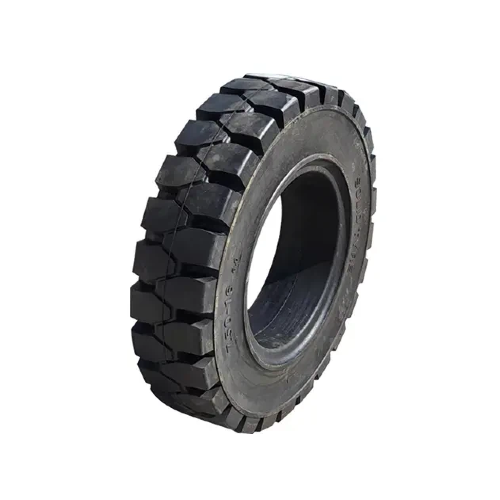
Forklift solid tires are known for their outstanding durability. Because they are made from solid rubber compounds, these tires can withstand harsh conditions, including rough, uneven terrain and extreme weather. Unlike pneumatic tires, which can burst or deflate when exposed to sharp objects, solid tires offer consistent performance without the risk of air loss.
Solid forklift tires can handle heavy loads without showing signs of wear or damage for extended periods. This durability makes them an ideal choice for industries that require round-the-clock operations and cannot afford downtime due to tire failures.
One of the biggest advantages of Forklift Solid Tires is their low maintenance. Unlike pneumatic tires, solid tires do not require regular air pressure checks or inflating. This eliminates the need for costly repairs and time spent on maintenance, which is especially important in fast-paced industrial environments. With solid tires, you don’t have to worry about punctures, air leaks, or blowouts, saving both time and money.
This reduced maintenance requirement translates into increased productivity, as forklifts with solid tires can operate without interruption, contributing to smoother operations and fewer costly downtimes.
Forklift Solid Tires provide enhanced safety for both operators and workers in industrial settings. With pneumatic tires, the risk of blowouts or tire failure can pose a significant safety hazard, especially when forklifts are carrying heavy loads. Solid tires eliminate this risk entirely, providing a safer and more stable ride.
Additionally, solid tires offer excellent traction and stability, especially on uneven or rough surfaces. This improves control of the forklift, reducing the likelihood of accidents caused by slipping or tire failures.
Although Forklift Solid Tires come with a higher initial cost compared to pneumatic or cushion tires, they are more cost-effective in the long term. Their long lifespan, coupled with their low maintenance requirements, makes them a smart investment for businesses looking to reduce operational costs. Over time, the savings on tire replacements, repairs, and downtime will outweigh the initial expense, making solid tires a cost-efficient choice for many industries.
Forklift Solid Tires are widely used in industries that require heavy-duty lifting and operations in rough environments. Here are some typical applications where solid tires shine:
In large warehouses, forklifts are constantly in use to move goods. The solid construction of forklift solid tires ensures that they can handle the demanding operations and high traffic, while providing excellent traction on concrete floors. Their durability reduces the need for tire replacements, which is crucial for maintaining productivity in fast-paced warehouse settings.
Manufacturing plants often involve heavy machinery, large loads, and challenging work conditions. Forklift Solid Tires are an ideal choice in these environments, where consistent tire performance is essential. These tires are designed to carry heavy loads and perform well on both smooth and uneven surfaces, ensuring stable operations.
Forklifts used in construction sites or outdoor industrial environments need tires that can withstand harsh conditions. Forklift Solid Tires are perfect for outdoor operations due to their ability to resist punctures and provide stability on rough, uneven terrains. Whether handling construction materials or machinery, solid tires offer reliable support.
Choosing the right tires for your forklift is essential to ensure optimal performance. Here are some factors to consider when selecting Forklift Solid Tires:
Before selecting tires, determine the load capacity of your forklift. Ensure that the tires you choose can handle the weight of the loads your forklift will be lifting. Overloading a tire can lead to faster wear and potential tire failure.
Tire size is crucial for the stability and performance of your forklift. Forklifts come in different models and sizes, so it’s important to select the correct tire size based on the manufacturer’s specifications. Incorrect tire size can result in poor forklift performance and reduced operational efficiency.
Consider where the forklift will be operating. Forklift Solid Tires are ideal for environments with rough or uneven surfaces, but they can also perform well on smooth indoor floors. For outdoor use, solid tires are especially suited for construction sites and areas with gravel or debris.
Certain industries require forklifts to operate in extreme temperatures. Forklift Solid Tires are designed to withstand temperature fluctuations and provide reliable performance in both hot and cold environments.
Choosing Forklift Solid Tires over other types of forklift tires offers several advantages, including durability, safety, and low maintenance. These tires are built to last longer, perform consistently, and require less upkeep, all of which contribute to a more efficient and cost-effective forklift operation.
In addition, solid tires are an excellent investment for businesses that operate in environments where the risk of tire damage is high. With Forklift Solid Tires, you can rest assured that your forklifts will remain in service longer, minimizing downtime and maximizing productivity.
Forklift Solid Tires are a perfect solution for businesses looking for durable, low-maintenance, and cost-effective options for their material handling needs. Whether operating in warehouses, manufacturing plants, or outdoor environments, these tires offer exceptional reliability and performance. By understanding their benefits and choosing the right tires, businesses can significantly improve operational efficiency, minimize maintenance costs, and enhance overall safety.
At Hengshui Kangyuan Rubber and Plastics Technology Co., Ltd., we specialize in providing high-quality Forklift Solid Tires designed to meet the demanding needs of various industries. Our tires are built for long-lasting performance, providing you with peace of mind and reduced downtime. If you're looking for the best solutions to optimize your forklift operations, our expert team is here to help. Feel free to get in touch with us to explore our range of products and find the perfect tires tailored to your business needs. We're committed to supporting you in achieving more efficient and cost-effective material handling.
What is the difference between forklift solid tires and pneumatic tires?
Forklift Solid Tires are made of solid rubber, providing durability and low maintenance, while pneumatic tires are air-filled and require regular inflation and maintenance.
Can forklift solid tires be used in outdoor environments?
Yes, Forklift Solid Tires are designed to perform well in both indoor and outdoor environments, including rough terrain and construction sites.
How do I know if my forklift needs solid tires?
If your forklift operates in environments where punctures, tire failure, or high maintenance are concerns, Forklift Solid Tires may be the right choice for you.
What factors should I consider when choosing forklift tires?
Consider factors such as load capacity, tire size, surface type, and temperature conditions when choosing the right Forklift Solid Tires for your needs.
How long do forklift solid tires last?
Forklift Solid Tires typically have a longer lifespan compared to pneumatic tires due to their durable construction and resistance to punctures.
Are solid forklift tires suitable for all types of forklifts?
Forklift Solid Tires are suitable for most forklift models, especially those used in heavy-duty and demanding environments.


