TAFU

- All
- Product Name
- Product Keyword
- Product Model
- Product Summary
- Product Description
- Multi Field Search

Views: 0 Author: Site Editor Publish Time: 2026-03-20 Origin: Site


Forklifts are a vital component in various industries, from warehouses to factories, helping businesses efficiently move heavy goods. However, to keep forklifts operating at their best, it’s crucial to choose the right tires. Among the different types of tires available for forklifts, Forklift Solid Tires stand out for their durability, low maintenance, and reliability. Unlike pneumatic tires, which are filled with air, solid forklift tires are made entirely of rubber, offering a range of benefits to improve the performance of material handling equipment.
In this article, we’ll dive into what forklift solid tires are, their benefits, applications, how to choose the right one, and why they might be a cost-effective choice for your business operations.
Forklift solid tires are non-pneumatic tires made entirely of rubber or a rubber-based composite material. Unlike traditional pneumatic tires, which require air pressure to support the vehicle’s weight, solid tires provide a more robust and reliable alternative. Their all-rubber construction means they don’t puncture, leak, or require inflation.
These tires are manufactured in various sizes to fit different types of forklifts and material handling equipment. The design ensures a solid structure that can withstand heavy loads and tough working conditions without the risk of blowouts.
In essence, solid forklift tires are designed for high durability and minimal maintenance. They are often used in environments where consistent performance is crucial, and downtime due to tire failure is not an option.
Feature | Forklift Solid Tires | Pneumatic Tires | Cushion Tires |
Structure | Full rubber, solid | Air-filled rubber | Solid rubber (but smaller) |
Maintenance | Low maintenance, no air pressure | Requires air pressure checks | Low maintenance |
Risk of Punctures/Blowouts | No punctures, no blowouts | Risk of punctures, blowouts | Very low risk |
Durability | High, long-lasting | Moderate | Moderate |
Performance on Uneven Surfaces | Excellent grip and traction | Good traction, less durable | Limited traction |
Cost | Higher initial cost, long-term savings | Lower initial cost, frequent replacements | Lower initial cost |
Forklift solid tires are known for their exceptional durability. Made from a solid rubber compound, these tires can withstand the harshest conditions, from rough terrain to extreme temperatures. Unlike pneumatic tires, which can easily suffer from punctures and damage, solid forklift tires provide a longer service life and require minimal maintenance.
The robust construction of solid forklift tires ensures that they can handle substantial loads over long periods, making them ideal for industries that require high-performance material handling, such as warehouses, factories, and distribution centers.
One of the most significant benefits of forklift solid tires is low maintenance. With solid tires, there is no need to check or maintain tire pressure, as there are no air chambers. This eliminates the risk of tire blowouts caused by over- or under-inflation, a common issue with pneumatic tires. Furthermore, solid forklift tires do not require regular air pressure checks or frequent repairs, reducing maintenance time and associated costs.
This reduction in tire-related maintenance can significantly improve the overall efficiency of operations, ensuring that forklifts stay in service longer and requiring fewer costly repairs.
Safety is a primary concern in any industrial setting, especially when handling heavy materials. Forklift solid tires provide improved safety by eliminating the risk of blowouts or air leaks, which are common hazards with pneumatic tires. By providing a more stable ride, solid tires also reduce the chances of accidents caused by sudden tire failure, improving the overall safety of the workplace.
These tires are also designed to provide excellent traction and grip on various surfaces, further enhancing safety by preventing slippage and enhancing control of the forklift, even when working on rough or uneven surfaces.
The design of forklift solid tires offers superior traction compared to other types of tires. This is particularly important when working in environments where forklifts may need to navigate uneven or rough surfaces. The solid rubber construction ensures a firm grip, which enhances stability, especially when lifting heavy loads or navigating tight spaces.
Whether the forklift is used indoors in a warehouse or outdoors in an industrial yard, solid tires are designed to perform consistently in both settings.
Forklift solid tires are widely used in various industries due to their durability and low maintenance needs. They are suitable for a range of applications, including:
In warehouse environments, where forklifts are constantly moving goods, solid tires are the perfect solution. They provide long-lasting durability and superior traction on smooth concrete floors, minimizing the risk of downtime due to tire issues.
In manufacturing plants, forklifts often deal with heavy loads and rough surfaces. Solid forklift tires are ideal for these conditions, offering stability and durability even under harsh working environments.
Forklifts used outdoors in construction sites or industrial yards can benefit from solid tires due to their ability to withstand uneven, rough terrains without the risk of tire damage. Solid forklift tires offer excellent grip on gravel, dirt, and other non-smooth surfaces.
Forklifts that handle particularly heavy loads will benefit from the load-bearing capabilities of solid tires. These tires are designed to carry heavy weights without compromising performance, making them a preferred choice in industries that require heavy lifting.
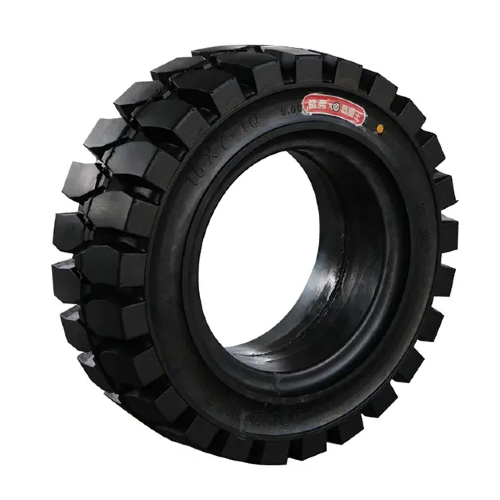
Solid forklift tires help ensure that forklifts remain operational for longer periods, as they do not suffer from the typical issues that cause downtime in pneumatic tires, such as air loss or punctures. With no need for tire replacements or frequent maintenance, businesses can maintain higher levels of productivity and efficiency.
Although solid forklift tires come with a higher upfront cost compared to pneumatic tires, they offer significant long-term savings. Since solid tires have a much longer lifespan and require less maintenance, they reduce the overall cost of ownership. Businesses save on tire replacements, repairs, and maintenance, making solid tires a more cost-effective choice in the long run.
Cost Factors | Solid Forklift Tires | Pneumatic Tires |
Upfront Cost | Higher | Lower |
Maintenance Costs | Low | High (frequent repairs) |
Replacement Frequency | Rare | Frequent |
Total Cost of Ownership | Low (over time) | High (over time) |
Choosing the right solid forklift tires is crucial for ensuring optimal performance and cost-effectiveness. Here are the key factors to consider:
It is essential to choose solid forklift tires based on the forklift’s load capacity. Overloading the tires can lead to premature wear and failure, while underloading may result in inefficient performance. Always check the tire specifications and ensure that they match the capacity requirements of your forklift.
Tire size plays a vital role in performance. Using the correct tire size ensures that the forklift operates at its peak efficiency and stability. Tire sizes vary depending on the model and make of the forklift, so it’s important to refer to the manufacturer’s recommendations.
The environment where the forklift operates will also affect the choice of tires. Solid tires are ideal for smooth indoor floors as well as rough, uneven outdoor surfaces. If you plan to use forklifts in both environments, ensure the tires are suitable for mixed use.
Certain industries require forklifts to work in environments with extreme temperatures. Solid tires are designed to withstand a wide range of temperatures, from cold storage facilities to hot manufacturing plants. Choose tires that are specifically made to handle temperature extremes based on your business needs.
Solid forklift tires may seem more expensive initially, but they offer substantial savings in the long run. Their durability and reduced maintenance costs make them an investment worth considering for any business looking to optimize forklift operations.
When you factor in the cost of tire replacements, repairs, and downtime due to tire failure, solid tires prove to be the more cost-effective option over time. Additionally, they contribute to the overall safety and efficiency of your material handling operations.
Forklift solid tires are a top choice for businesses aiming to boost operational efficiency, reduce maintenance costs, and improve safety in industrial environments. With their impressive durability, low maintenance needs, and long-lasting performance, they are perfect for applications in warehouses, manufacturing plants, and outdoor settings. By understanding the advantages of solid forklift tires and selecting the right ones for your specific needs, you can ensure smooth, safe, and cost-effective operations for years to come.
At Hengshui Kangyuan Rubber and Plastics Technology Co., Ltd., we specialize in providing high-quality forklift solid tires tailored to meet the unique demands of your business. Our expert team is here to help you choose the ideal tire solutions to optimize your forklift performance. For more information or to discuss your requirements, feel free to reach out to us. We are committed to helping you find the best tire options to enhance your operations and drive success.
What is the difference between solid forklift tires and pneumatic forklift tires?
Solid forklift tires are made entirely of rubber and do not require air pressure, while pneumatic tires are air-filled and require regular maintenance and air pressure checks. Solid tires are more durable and require less maintenance.
Can solid forklift tires be used for outdoor operations?
Yes, solid forklift tires are well-suited for outdoor environments, including rough terrains and construction sites, as they provide superior traction and durability.
How do I know which size of solid forklift tires to choose?
To choose the right tire size, refer to the manufacturer's specifications for your forklift model. Tire size depends on the forklift's load capacity and the specific operational environment.
How long do solid forklift tires typically last?
Solid forklift tires can last significantly longer than pneumatic tires, with a lifespan of several years, depending on usage and environmental conditions.
Do solid forklift tires need any maintenance?
Solid tires require minimal maintenance. There is no need for air pressure checks, and they are less likely to suffer damage compared to pneumatic tires.
Are solid forklift tires suitable for heavy-duty operations?
Yes, solid forklift tires are designed to handle heavy loads and harsh environments, making them perfect for heavy-duty material handling tasks.


