TAFU

- All
- Product Name
- Product Keyword
- Product Model
- Product Summary
- Product Description
- Multi Field Search

Views: 0 Author: Site Editor Publish Time: 2026-06-07 Origin: Site


For industrial facilities, OEM designers, and warehouse managers, selecting the right wheel material is not a minor detail. It directly dictates equipment uptime. It ensures optimal operational efficiency. It guarantees overall operator safety. Choosing the wrong material leads to accelerated wear. You will notice severe floor damage over time. Inferior wheels drain electric forklift batteries prematurely. They also trigger workplace ergonomic injuries from excessive push strain.
This article provides an objective, engineering-based comparison. We contrast rubber against polyurethane options. We strip away marketing claims. We rigorously evaluate core physical properties. We examine environmental limitations objectively. You will discover exactly how each material behaves under stress. You can then make confident engineering decisions. You will learn how molecular structures impact daily performance. We will help you match the exact material to your facility demands.
Load Threshold: Polyurethane wheels become the definitive choice when single-wheel load requirements exceed 400 lbs.
Durability & TCO: Polyurethane typically delivers a lifespan up to 3 times longer than standard rubber, significantly lowering long-term replacement costs.
Floor Protection: Traditional soft rubber often utilizes carbon black fillers that mark floors, whereas polyurethane is non-marking and actively repels warehouse debris like metal shavings.
The Heat/Speed Limitation: Rubber naturally dissipates internal heat, making it mandatory for high-speed or continuous-run heavy equipment. Polyurethane traps heat and can structurally fail under high-speed friction.
Ergonomics: The lower rolling resistance of polyurethane minimizes operator push/pull strain, aiding in EHS (Environmental, Health, and Safety) compliance.
We define rubber as a traditional elastomer. You can source natural or synthetic variations. Long-chain polymers form its primary structure. This molecular makeup provides excellent flexibility. However, it delivers lower tensile strength. Ratings typically hover between 1,000 and 3,000 PSI. Budget-tier rubber often utilizes recycled compounds. These cheaper blends fail frequently under moderate stress. They suffer from a destructive phenomenon called "chunking." The tread literally cracks and peels away. You lose smooth mobility instantly. Rubber requires careful formulation. Without premium additives, it degrades quickly in harsh industrial zones.
Engineers design polyurethane as a robust alternative. It relies on cross-linked synthetic polymers. Strong carbamate links bind the internal structure tightly. This highly engineered material boasts massive tensile strength. Values range anywhere from 3,000 to 8,000 PSI. Manufacturers can easily customize its Shore hardness. Durometer ratings usually span from 40 to over 90. The cross-linked molecular structure defines its core durability. It gives polyurethane wheels superior resistance to harsh chemicals. They repel industrial oils effortlessly. They aggressively resist physical tearing. You can deploy them safely in extreme environments.
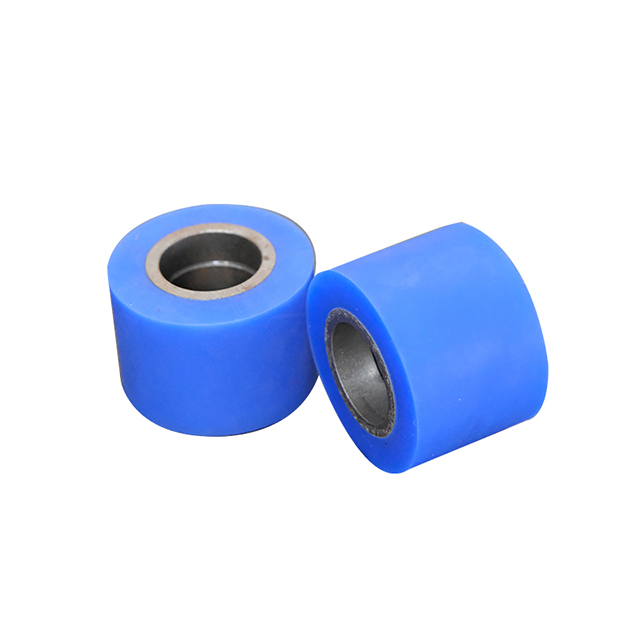
Engineers mold polyurethane into thinner treads. This profile handles massive weights effortlessly. Thinner treads prevent structural failure. They resist tearing under immense pressure. Rubber compresses heavily under similar loads. It flattens out dynamically while moving. Heavy compression creates unwanted drag. Both materials can develop "flat spots." This happens when carts remain stationary. Extreme weight crushes the wheel profile over long periods. However, high-quality polyurethane recovers its shape rapidly. It bounces back much faster than standard rubber. You regain smooth rolling almost immediately. You avoid the permanent deformation common in softer elastomers.
Rolling resistance deeply impacts daily ergonomics. Polyurethane offers an incredibly consistent coefficient of friction. Values stay strictly between 0.5 and 0.8. This consistency dramatically reduces initial push forces. Operators exert far less manual effort. This specific advantage aids EHS compliance. It effectively minimizes repetitive strain injuries. Energy efficiency also improves drastically. Class II and Class III electric forklifts rely heavily on battery power. Low rolling resistance translates directly to extended runtimes. You squeeze more life from every single charge. Your motorized equipment works longer. Your operators experience less fatigue.
Floor marking plagues many industrial facilities. Soft rubber typically uses carbon black fillers. These compounds leave dark streaks on light surfaces. You might try "hard grey" rubber instead. It avoids immediate marking. Unfortunately, it hardens over time. It eventually scratches expensive epoxy floors. Polyurethane remains naturally non-marking. It keeps floors perfectly clean. Debris resistance presents another major difference. Rubber absorbs and traps shop debris. It holds onto sharp objects. Conversely, polyurethane wheels reject floor hazards actively. They roll smoothly over metal shavings. They ignore weld slag entirely. Wood chips cannot penetrate the synthetic tread.
Speed creates a crucial safety limitation. Polyurethane cannot dissipate internal heat effectively. High speeds cause rapid thermal buildup. A physical phenomenon known as hysteresis traps energy inside. The material softens temporarily under this extreme heat. It can suffer catastrophic structural failure. Rubber holds a definitive advantage here. It dissipates internal heat naturally. This makes rubber mandatory for combustion-engine forklifts. You must use rubber for high-speed outdoor towing. Wet traction also strictly favors rubber. Its wider footprint grips slippery surfaces firmly. Polyurethane can lose traction unexpectedly. It slips easily on wet epoxy flooring.
Shock absorption matters deeply for delicate payloads. Rubber provides the maximum possible cushioning. It dampens heavy vibrations completely. It protects fragile cargo over rough concrete. You can navigate uneven outdoor terrain safely. Polyurethane rides much stiffer than rubber. It transfers more vibration into the equipment frame. It prioritizes load capacity over ride comfort. However, it still reduces workplace noise effectively. It runs significantly quieter than steel or nylon. You can maintain a quiet facility. You just sacrifice some baseline shock absorption.
Performance Metric | Rubber Wheels | Polyurethane Wheels |
|---|---|---|
Tensile Strength | 1,000 - 3,000 PSI | 3,000 - 8,000 PSI |
Load Capacity | Low to Moderate | Exceptionally High |
Heat Dissipation | Excellent (Safe for high speeds) | Poor (Prone to structural failure) |
Debris Resistance | Poor (Traps metal/glass) | Excellent (Rejects sharp debris) |
Floor Marking | High (Due to carbon black) | None (Naturally non-marking) |
Shock Absorption | Maximum Cushioning | Stiff Ride |
The application remains predominantly outdoors.
You navigate rough, uneven terrain frequently.
The equipment travels at high speeds constantly.
Heat dissipation is non-negotiable for vehicle safety.
You require maximum shock absorption for fragile payloads.
The facility environment stays wet consistently.
You need wide-footprint traction to prevent dangerous slipping.
Your per-wheel load capacity strictly exceeds the 400 lbs threshold.
Wheels fail frequently due to harsh chemical exposure.
Industrial solvents and cleaning agents destroy your current treads.
Metal shavings chew up your softer wheels daily.
Screws and weld slag embed deeply into the rolling surface.
Corporate EHS mandates demand lower push/pull strain for operators.
You need to extend the battery life of your motorized equipment.
There is no universal best wheel. You must choose the right material for your specific operational environment. Rubber excels in high-speed scenarios. It dominates outdoor applications. It handles high-vibration applications perfectly. It provides the necessary traction for wet surfaces. However, polyurethane provides vastly superior performance for indoor industrial use. It manages incredibly heavy loads effortlessly. It ensures overall longevity in harsh conditions. Its ergonomic benefits protect your workforce from strain.
We encourage you to audit your current failure points today. Walk your facility floor. Check if you see chunking on your carts. Look for chemical swelling on your equipment. Consult an application engineer immediately. They can match the exact Shore hardness to your facility needs. Upgrading to polyurethane wheels can resolve persistent maintenance headaches permanently. You will achieve smoother operations. You will protect your expensive floors.
A: No. They are entirely non-marking. They contain no carbon black fillers. They resist embedding sharp debris. This prevents them from scratching smooth surfaces. You can use them safely on delicate floors.
A: This is a phenomenon known as "chunking." It is common in cheaper or recycled rubber wheels. It happens when you subject them to loads beyond their tensile limit. Sharp debris also causes it. Polyurethane's cross-linked structure prevents this specific failure.
A: While possible, it is not optimal. Prolonged exposure to UV rays degrades polyurethane. Continuous rough terrain breaks it down faster than rubber. Rubber is naturally suited for outdoor shock absorption. It handles varying weather conditions much better.


